985 Workbench: 2026-01-12

My Week in Radio

  • RTTY Round Up a week ago got me Oregon, the last state I needed for all 50 states for this current callsign
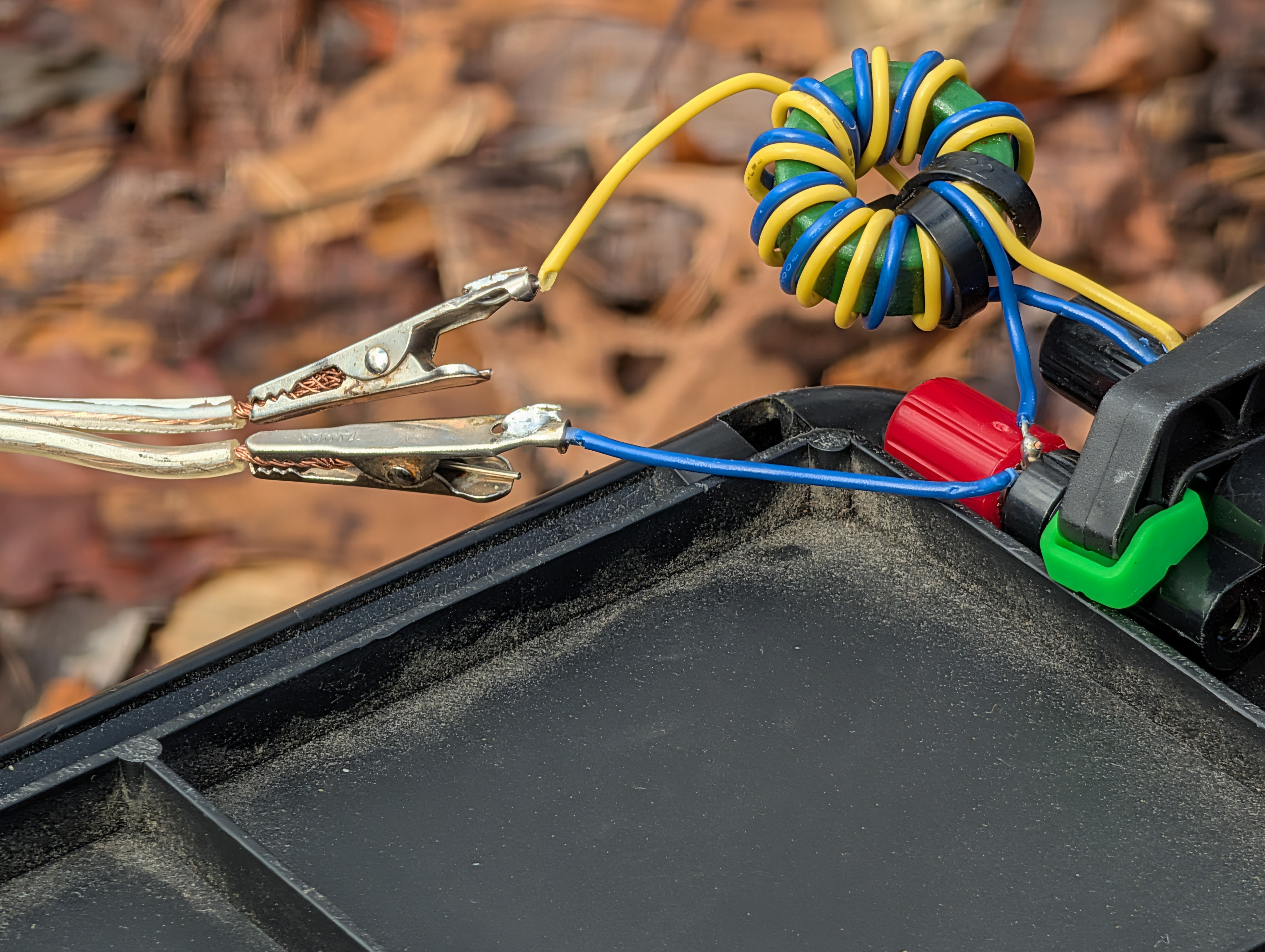
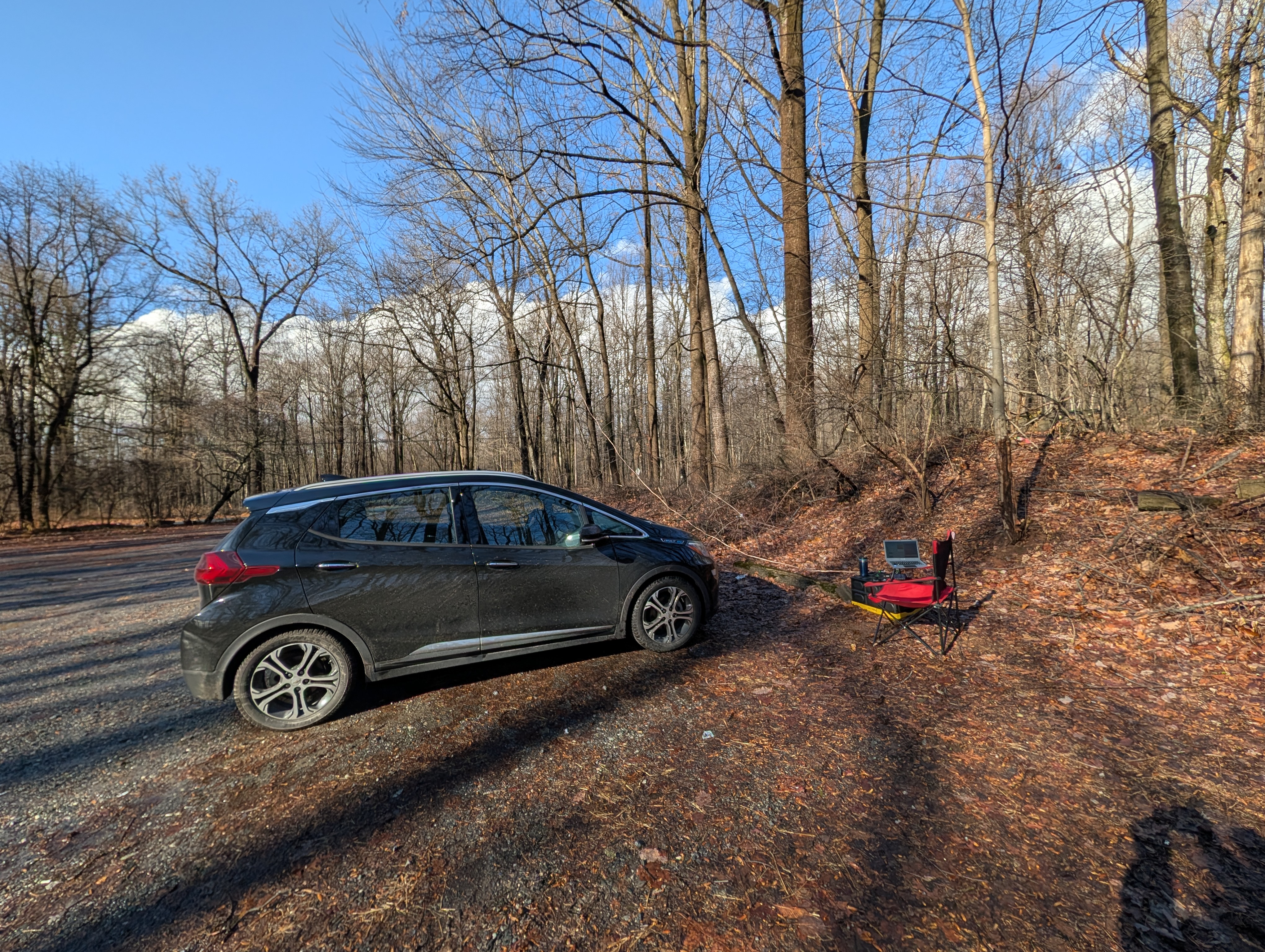
  • Strung up the 80M EFHW, found a lower SWR with counterpoise removed.

Others

  • W1RC, Mike:
    • looking for a 2M transverter for his Elecraft radio
    • getting Yaesu Fusion working to check-in to a net
      • doesn’t like the audio so much
  • W8CRW, CR:
    • helping chuck and george at the field day site on thursday
  • K3EMI, Randy:
    • putting up an OCF dipole on the roof in nice weather
    • coax is super-stiff
  • KC3SCY, Luke:
    • setup the new riser for his desk
    • almost done building a power supply for a transmitter he built
    • some CW
    • excited for WFD
  • K9CAN, Kris:
    • from Eugene OR
    • hosting a winter field day site on a mountain
    • working on a new antenna project
      • multiband
      • modular
      • 3d printing parts for it
      • doublet pieces
  • NA3CW, Chuck:
    • Thursday work session at field day site
      • 9:30am-dark
      • got ropes and pulleys into trees
      • next up
        • launch the dipoles
        • service the beams
        • saturday
        • cold and dry
    • Joe’s tuner is coming alive
      • steppers working in one direction and chattering in the other
      • feedback POTs reading fine
  • KC3OOK, Bill:
    • net control for Simplex Net and for Welfare Net
  • W3KZG, Scott:
    • organizing shack
    • repairing and updating an old export 10M rig
    • preparing trailer for field day
  • W3QP, Tim:
    • SOTA trips coming up in February
  • AF3Z, Jim:
    • SKCC
      • scheduling operators
      • operated saturday and this afternoon
      • worked WA and CA
  • KC3SQI, Wayne:
    • need to drop the new mast to fix 10M vertical dipole
    • TV pre-amp needs service too
  • WA3VEE, Ron:
    • Welcome K9CAN, Kris.
    • Helped at Field Day site
      • watching George with the potato gun for shooting high lines into trees
      • Met a new ham, KD3CJH, Kiana.
      • worked 8 countries testing beams at FD site

Questions

  • AF3Z, Jim:
    • For WFD, How do we expect winter weather to effect electronics and radio gear? Any likely failures?
    • KC3SQI, Wayne:
      • probably no worry here in PA.
      • in Rocky Mountains, CO, it did make a difference.
        • wire would kink but not unkink, breakage
    • NA3CW, Chuck:
      • crystals and oscillators will have a temperature coefficient
      • transistors won’t care
      • operators will be stiff
      • LCD screens will slow response, freeze and turn black
      • Li-ion batteries will degrade faster
      • starting generators can be difficult
    • W3KZG, Scott:
      • trailer runs solely on battery + solar
      • 300Ah 13V battery
      • Summer field day used 18% of the battery to run FTD-10 radio for 2 days
    • KD3EE, John:
      • batteries may need to be swapped to keep warm, like digital cameras
      • has seen LCD on radios stop updating in cold
    • W3QP, Tim:
      • some batteries, like LiFePO, don’t like to charge below freezing
    • AC2EG, Eric:
      • Commercial-rated (not industrial) laptops can have trouble below 25F. maybe won’t boot.
    • W8CRW, CR:
      • LiFePO with a good BMS will keep it from charging in damaging (too cold) conditions
    • AF3Z, Jim:
      • operating CW can be hard in the cold
  • WA3VEE, Ron:
    • For those in HOA, what might be a successful, inside antenna? Maybe not in the attic?
    • AF3Z, Jim:
      • Do you really need to be horizontally polarized?
        • 10M dipole isn’t huge.
        • mobile ground plane verticals
    • WA3VEE, Ron:
      • horizontal will be best, but either way, I guess
      • wires taped to the ceiling?
    • AF3Z, Jim:
      • magnetic loops?
      • 16 feet for a dipole?
    • W3KZG, Scott:
      • 11M dipole hanging in a tree, 6ft from the ground: similar to hanging it from the ceiling.
        • split right off the coax, speaker wire
      • just try it
      • try a magmount vertical
      • try it on a balcony
      • near a window: magnetic loop
    • KC3SQI, Wayne:
      • use 11M whip antennas, and trim it
      • wire across the wall
      • work from the balcony
      • drop a piece of wire from a higher floor
      • outside will avoid inside RFI
      • inside can mess with other electronics :)
    • W3KZG, Scott:
      • may have an 11M whip to donate
    • W3QNZ, Joe:
      • recycled a pota antenna made of scrap wire and a cobra head
      • moved it into the attic
    • KD3EE, John:
      • may have a loop antenna to lend
      • run wires down the hallway or the loft
      • use lower power, digital modes, CW, weak signal for results
Automatic Allstar Link to 985

I updated rpt.conf on my node to enable the 813 DTMF code for making permanent link. The permanent link will try to re-establish itself after a disconnect.

It doesn’t re-establish upon reboot, so a macro is still needed on startup. I updated the existing startup macro to *81353085 after *77 (report).

985  w3gms  allstar 

985 Workbench: 2026-01-05

My Week in Radio

  • 80M EFHW today for better receive to place 21.6M-long EFRW
    • realized it may be better listening as it’s resonant
    • Random wire may be “noisy”, because tuned other than what I want to hear
  • worked some contests:

Others

  • W8CRW, CR:
    • 985 nets
    • Bill’s for antenna building + computer fest
  • AA3LH, Leon:
    • playing with 1:1 baluns on G5RV
    • seeing different antenna performance through the week
    • quicksilver balun is doing really well
  • WA3VEE, Ron:
    • happy new year
    • field day work this week
      • wednesday meeting
      • thursday building
    • RPi 3B+ for an allstar node
    • 2 VE sessions:
      • Passed a local student for tech license: Kiana
      • Passed 8 more on Saturday
    • If you’re an extra, see about being a VE.
  • KC3SCY, Luke:
    • building a 1929 transmitter and power supply on contract: basically done.
    • 75M AM recently
    • At Joe’s for winter break to build a desk riser, etc.
  • KC3RFG, Jim:
    • built a clear, stackable case with a a fan for his ham clock.
  • NA3CW, Chuck
    • final testing of Joe’s tuner project
      • building a wooden test stand for maintenance of the tuner
  • W3KZG, Scott:
    • checked out field day site
  • KC3MAI, Joe:
    • visited Bill’s for dipole build
  • KD3AIS, Tim:
    • visited Bill’s for dipole build
  • W3MFB, Mike:
    • 80M DX nets and contacts
    • using remote web-SDRs to see how far away he here’s his net contacts: many states away, maybe even Europe
  • KC3NZT, Harvey:
    • played with computers at Bill’s
  • KB3ILS, Keith:
    • WFD chairman
    • Winter Field Day
      • Jan 24-25
      • active planning, building, testing
      • 14 people at Bill’s
      • master class in soldering dipoles
      • Thursday will be installing antennas
    • Working straight key night, including AF3Z, Jim.
  • WA3KFT, John:
    • stranded wire is nice, but solder joints of stranded can make a weak point
    • preferring copper-clad steel wire far antennas.
    • has stayed up for 20 years before needing replacement

Questions

  • KD3EE, John: I want a 2-meter antenna to build that’s simple, sturdy, and I can pull up into a tree. I have the 1/4-wave ground plane and a slim jim already. Flowerpot antenna looks cool. Suggestions?
    • WA3KFT, John:
      • j-pole of copper pipe: tee, elbow, pipe
        • plans everywhere
        • sweat solder some joints
    • WA3VEE, Ron:
      • X50 that already has the ground plane radials
    • W3MFB, Mike:
      • use a bit of conduit as a counterweight
      • pull a 25-foot antenna up into a tree above the mount point on that conduit.
    • KC3NZT, Harvey:
      • see W6NBC’s website for home-made antennas
        • including slot design made of aluminum foil tape and pvc
        • delta loop for a bit of directional gain
    • KC3RFG, Jim:
      • second the j-pole: rugged
      • pipe is thick for better bandwidth
    • KD3EE, John:
      • Mike: i love the idea of hoisting above the mount point
      • Harvey: I have all those pieces here: i can have something by day break!
  • KD3AIS, Tim:
    • Why can it be heard on the digital side?
    • W3DIB, Greg:
      • Yes, you are hearing the intermod on digital.
      • echolink/allstar is external to the repeater, not integrated, so that radio is hearing the intermod.
    • W3GMS, Joe:
      • You should not hear intermod for digital people.
      • 146.385 receive audio is sent to a simplex link, which is sent to Joe’s house, then into Allstar node to the internet.
      • People connecting via digital, goes to node at Joe’s, processed, then sent up the simplex link to the repeater.
      • People connecting through digital shouldn’t exhibit intermod.
    • NA3CW, Chuck:
      • Those people you thought were digital, may have been analog.
    • W3DIB, Greg:
      • technically, if a digital person is listening to another digital person, it’s just a VOIP call, no RF really needed.
  • W3MFB, Mike:
    • What’s the history of an HF radio that’s been “MARS-modded”, and what’s its purpose?
    • WA3KFT, John:
      • MARS frequencies are near, but outside the HAM bands
      • In some radios, like IC-706, you remove a diode to allow it to transmit anywhere.
      • Make a ham radio able to transmit on any frequency.
    • WA3VEE, Ron:
      • MARS = Military Auxiliary Radio System
    • W3GMS, Joe:
      • commercial radios sold are not allowed to transmit outside amateur band for “type acceptance”
    • NA3CW, Chuck:
      • big manufacturers sell lots more gear beyond ham operators.
      • those radios can be used by other people
      • keep the average “appliance operator” from wandering out of band.
    • W3MFB, Mike:
      • Understand the motivation to make it difficult. It’s illegal to work outside band on a radio not type-accepted in those bands.
  • KC3NZT, Harvey:
    • How do existing filters work when out of band?
    • NA3CW, Chuck:
      • Yes, they still pass through existing filters, so maybe not very clean.

21 Tech Net: 2026-01-04

My Week in Radio

  • muted the APRS channel on my UV-PRO, so I don’t need to hear that squawking away
    • there is an option to mute digital, but it only works when it recognizes it’s digital
  • been testing a doublet built from:
    • a split speaker wire,
    • 44ft end to end
    • a 4:1 balun
    • choke balun
    • 30 FT8 contacts on 20M at 1W for a park activation
  • 80M EFHW today for better receive to place 21.6M-long EFRW
  • worked contests:
  • gave one of Tom’s cool little ATS radios to a friend’s kid, get him bitten by the bug

Others

  • K3EA, Greg:
    • special event station
    • this past weekend:
      • rtty contest
      • psk31 contest
    • NA QSO party, CW next weekend
  • WB3LNY, George:
    • working on some 12V power supplies
  • VE3HOH, Pete:
    • ordered some radios
    • great tuner
  • KA3TKW, Tom:
    • RS-40 pass at 8:40 tonight
    • 437.625
    • no special equipment needed
    • trivia net on wednesday
    • Saturday Hamfest in Harrisburg, W3UU
    • new commercial satellite:
      • AST bluebird 6
    • mod firmware for ATS v4 radio
      • waterfall
      • s17432
      • decodes CW and RTTY
    • DigiRig Mobile: $49
      • audio
      • PTT (no need for VOX), so better than just a USB sound card
      • connect lots of radios
    • lots of SSTV
    • ordered a UHF Moxon SSTV antennas
      • big in RC airplane world
      • range video LLC
  • K3DMM, Denny:
    • not much luck with SSTV yet
  • KC3VZU, Bob:
    • not getting to the ham fest
    • working on full-band radio in truck, replaced the mic
  • W3MW, Don:
    • finishing wiring of antennas
    • getting shack back in order
  • KC3ZBI, Ron:
    • doing paperwork to do a ham radio program for a local school
  • KC3EWN, Curly:
    • new Arrow antenna
    • Icom W-32A, full-duplex, 5W
    • ready for satellite
  • K3EA, Greg:
    • DigiRigs have wiring for old rigs
  • VE3HOH, Pete:
    • watch 401MHZ and 401.025 for occasional satellites
21  technet  net  ka3tkw 

985 Workbench: 2025-12-29

My Week in Radio

  • gifted a tiny HF radio receiver to a friend’s kid
    • whip, loop, + wire antenna I added.
    • listening is how I ended up licensed.

Others

  • K3KB, Alan:
    • cleaning out old gear to maybe move
      • RC airplanes
      • test gear
      • kits
      • very old HTs
      • will bring to next breakfast
  • NA3CW, Chuck:
    • working on Joe’s tuner: about to power up
  • AF3Z, Jim:
    • 10M CW sked
    • very few signals otherwise
    • heard a solid CQ
      • on at 8000ft mountain in mexico
      • heard JM7OLW (Japan), and got it finally
      • 6pm on 10M
  • KC3OOK, Bill:
    • ham shack is about finished
  • KC3NZT, Harvey:
    • got a new wire up in the air
    • all bands were open for testing: 6M-40M
  • KV3JGB, Matt:
    • working some HF
    • new CWOps academy class
  • KD3AIS, Tim:
    • listening to HF while doing other work
  • WA3KFT, John:
    • 28435khz 1pm-2pm retired net
      • contacted OK, TX

Questions

  • K3OU, Manny:
    • building his shack from zero, looking at 2 transceivers:
      • Yaesu FT-DX10 (hybrid SDR)
      • ICOM 7300 Mk2 (SDR)
    • which performs best?
    • WA3KFT, John:
      • using 7300 for 5 years
      • lots of features he’s not used
      • has an ATU
      • uses an amplifier with it sometimes
      • likes it
    • K3KB, Alan:
      • had an IC-7300 for a while
      • doesn’t use the ATU, uses external instead
      • what do you mean by performance?
    • K3OU, Alan:
      • reception performance:
        • receiving weak signals
        • rejecting side signals
    • KC3NZT, Harvey:
      • both rigs are top-tier
      • IC-7300 is intuitive to Harvey, so never read the manual
      • play with both UIs to see what you like
      • ease of use may be more important than performance
      • HRO has them available for demo
    • KA3GLI, David:
      • download each manual and spec sheet for comparisons
    • WA8CRW, CR:
      • FTDX10 has better specs
    • NA3CW, Chuck:
      • Radios sound differently, so you want to hear it connected to an antenna
      • IC-710 sounded nice at field day to Chuck
      • Kenwoods sound nice to Chuck
      • some may be better for DX or general use
    • KC3OOK, Bill:
      • Will any of those be at WFD?
      • Be careful reading only specs, some specs can be misleading
    • WA3VEE, Ron:
      • looked at output of 7300. sending smugmug link
      • Ron has both radios and will bring them to WFD.
      • there should be more there
      • FTDX10 has an external display port
        • IC-7300 didn’t have it
        • IC-7300 Mk 2 may have it
      • FTDX10 has a wider spectrum display
      • IC-7300 is a well-featured “starter” rig
        • FTDX10 has more features
      • look up sherwood engineering for comparisons
    • W3GMS, Joe:
      • settling on a rig’s UI is a lot like picking a car.
        • drive it before buying it
      • .1uV difference will not be perceivable: it’s in the noise
      • all rigs are pretty good
      • visit someone and test drive their rigs
      • IC-7300 seems like great bang for the buck
      • don’t get hung up on specs
      • roofing filters are a great feature when operating multiple rigs
      • kenwoods have great audio
    • WA3KFT, John:
      • 5 years
      • spectrum scope is the #1 reason to buy it: expandable to analyze a signal
    • K3OU, Alan:
      • thanks for all the advice, especially test driving at field day
      • hasn’t been on an HF rig since 80s
    • KC3NZT, Harvey:
      • use different audio presets between rag chewing and contesting
    • K3OU, Alan:
      • not going to contest, just chat
  • KD3AIS, Tim:
    • Looking at band plan, why and how do people use the really high microwave frequencies
    • W3MFB, Mike:
      • people will use a 10M radio to drive a transverter and parabolic antenna
      • higher frequencies may be useful for satellite
    • WA3VEE, Ron:
      • has seen 5GHz and 10GHz operations
      • very line-of-sight, maybe from summits
    • KC3OOK, Bill:
      • IC-905 does those bands
    • KC3NZT, Harvey:
      • for experimentation
      • there are local people active on 1.2GHz
      • much smaller antennas and dishes
  • KD3EMS, Chris:
    • What would be more secure for the church than using FRS? DMR?
    • KC3NZT, Harvey:
      • look into MURS, it’ll at least not be as common
      • it may allow base stations
    • KD3EE, John:
      • you may want to contact a commercial radio dealer to get setup on a licensed business frequency
    • WA3VEE, Ron:
      • DMR would be more complicated to setup
    • W3GMS, Joe:
      • contact Metropolitan Communication for commercial setup and coordination
    • KD3EMS, Chris:
      • Triangle Communications in New Holland is nearby

985 Workbench: 2025-12-22

My Week in Radio

  • I discovered UV-Pro can mute a channel, which I applied to my APRS channel.
    • had gotten distracted by a feature to “mute digital signals”, but that doesn’t work very well: taking a while to recognize and mute
  • took the speaker-wire doublet out for another test:
    • POTA after 985 breakfast
    • inverted-v
    • with a 4:1 balun + 1:1 current choke
      • tuned easily
      • no USB disconnects
    • 30 contacts with 1W FT8.
  • I’m having a terrible time terminating RG174 + SMA: shorts

Others

  • WA3VEE, Ron:
    • WFD is last full weekend of January: W3R
    • checked 40M dipole at the field day site: contacted Indiana
    • January 3, there’s a testing session in northern delaware
  • KC3RFG, Jim:
    • PI-4 running ham clock died, lost SD card
  • AA3LH, Leon:
    • introduced a choke balun to his G5RV
  • WA3KFT, John:
    • 10M open: Oklahoma and Texas
  • AF3Z, Jim:
    • Pentec Trident 4 drifts as it warms up
  • W3KZG, Scott:
    • delivered a tower to Bill
  • KC3NZT, Harvey:
    • long wire came down, so building some new mono-filament linkages, for strain relief. those break instead of ripping stuff off the house.
  • KC3OOK, Bill:
    • simplex net, got to plymouth meeting
  • KV3JGB, Matt:
    • looking forward to WFD
    • starting CWOps fundamentals course

Questions

  • W8CRW, CR:
    • Does anyone make a universal repeater for bluetooth to be able to use it 100 feet away? Specifically for battery data.
    • KV3JGB, Matt:
      • most extenders are for audio
    • KC3NZT, Harvey:
      • could instrument the battery to get and publish your own statistics
  • AA3LH, Leon:
    • Would a 1:1 current choke benefit a vertical ham stick?
    • KD3EE, John:
      • may help. I use it to keep RFI out of the radio and the computer.
      • for verticals, I’ll often add that choke and radials.
    • NA3CW, Chuck:
      • like chicken soup, it may help, but it won’t hurt.
  • AF3Z, Jim:
    • His Pentec Triton 4 drifts up and down as it warms. What causes a radio to drift?
    • WA3VEE, Ron:
      • could be a leaky capacitor
      • heat related some way
      • odd that it drifts both ways
    • NA3CW, Chuck:
      • test the tester, read-out
      • check with an online radio
    • WA3VEE, Ron:
      • google says it drifts
    • KC3NZT, Harvey:
      • eHam forum people say ignore the read-out and see what the receiving side is seeing.

Mute Channel on UV-Pro

I found I can mute the dedicated APRS channel on my Btech UV-Pro to never make a sound, so I can listen to the 2 dual-watch channels without needing to hear digital squawks.

The UV-Pro already had a feature to mute what it recognizes as digital signals, but that always takes a moment to activate it. I don’t know how that’s useful at all.

The RT-880G has this feature, and it got me thinking and reading manuals.

uvpro  btech  aprs 

2025-12-19 US-8751

I activated US-8751, State Game Land 52. I deployed the speaker-wire doublet again in an inverted-V to operate 1W on 20M. It ran NW-SE, and I used the 4:1 and a 1:1 current balun on the coax. It tuned well in 20m, and caused no USB disconnects! My 1W FT8 signal was heard in France and Spain.

The Evolve 3 keyboard had some dead keys: w t. It doesn’t seem I can fix that, so it may need to be replaced.

985 Workbench: 2025-12-01

My Week in Radio

  • playing with my speaker wire doublet portable
    • extended to 44ft end to end
    • 10M and 40M tuned with some work
    • 20M tuned easily, but killed the radio’s USB connection with every TX
    • adding a current balun for next test
  • CQ WW CW 2025
    • 20 contacts on CW
    • estimated maybe 200 points
    • heard Hawaii on 40M
  • participated in Simplex Net, and got a strong signal to west control

Others

  • W1RC, Mike:
    • sorted stuff in the garage decide its fate
  • W3MFB, Mike:
    • hosted the roundtable last week and this week
    • heard all the controls of simplex net
    • 10M HF work mobile
  • WA3VEE, Ron:
    • visited Bar Harbor area: Elsworth and Bar Harbor repeaters
  • K3FF, Rene:
    • installed capacitor board into Clipperton:
      • full voltage and working!
      • 700-800W out: needs some new tubes
    • ATU-1000 kit
      • follow picture to assemble
  • KB3MNA, Chris:
    • setting up home station
    • studying for General
  • W3QP, Tim:
    • activated all the summits in iowa: 2 of them
    • South Dakota, Minnesota, Wisconsin
    • Friday is Pottstown Club meeting: why you should be chasing SOTA
  • KD3BPI, Simon:
    • shopping HF rigs on FB marketplace
    • studying for general
  • NA3CW, Chuck:
    • PMAM Net: 16 checkins
      • good conditions
      • lots of DX 100 heathkits sounding good
  • KC3OOK, Bill:
    • central control for simplex net
  • W3KZG, Scott:
    • replaced truck radio with IC-7100
    • made a few HF contacts
  • WA3KFT, John:
    • Antique Wireless 40M Net saw lots of New England
    • 10M is open
  • KD3AIS, Tim:
    • 30-inch antenna on magmount didn’t work out on truck
    • playing with meshtastic: T-Beam supreme
  • KV3JGB, Matt:
    • studying CWOps to refresh

Questions

  • W8CRW, CR: Made a homebrew antenna for Simplex Net. How would one figure out the max power for a homebrew antenna?
    • NA3CW, Chuck:
      • “it depends”
      • size of conductor
      • contacts
      • insulation (voltage)
      • cores
      • cables
      • durability of all the components
      • a dipole and wire line with good insulators can take multiple kW
      • transformers and coils introduce weak points
    • W3KZG, Scott:
      • matching circuit of a commercial antenna introduces limitations
      • in simple dipole, the feed line may be the only limit
      • run some power and see if anything is getting hot
    • WA3VEE, Ron:
      • components and size of wire
      • capacitors have ratings
      • figure out the voltage on the antenna: it’s in the study manual
    • WA3KFT, John:
      • on a simple dipole, the feed point is low-voltage, but the ends are very high, so that’s where you need the insulation
    • W3MFB, Mike:
      • can cut insulators from PTFE scraps.
    • NA3CW, Chuck:
      • at very high power, the sharp ends will form corona discharges.
        • round ends or put balls on it
        • not a problem for our power
      • a shortwave station in the Andes years ago would burn off the ends of the antennas, so they went to egg-beater ends.
    • W8CRW, CR:
      • it’s actually a simple quarter-wave ground-plane
      • good to know 100W will be nothing for it
  • AF3Z, Jim:
    • Hasn’t put specific insulator on his dipole, just tied to some paracord. Does a real insulator make a difference?
    • WA3KFT, John:
      • on a 40M or 80M dipole, the end will be high voltage.
      • nylon cord is probably fine at 100W.
      • if it absorbs and holds water, it can extend and detune the antenna.
      • insulators shed water
    • NA3CW, Chuck:
      • wet rope will drain energy and effect efficiency
      • 100W won’t matter much
      • some are a foot-long and heavy porcelain, etc
    • WA3VEE, Ron:
      • ice on the cord with no insulator will detune the antenna
  • W3MFB, Mike:
    • can you co-phase 20M or 40M vertical antennas? is it then directional?
    • WA3VEE, Ron:
      • directional AM broadcast antennas are co-phased.
      • yes it can be done for ham frequencies
    • KA3KFT, John:
      • worked at an AM station
      • 3 towers tuned and phased for a 4-leaf pattern
      • between 1/4 and 1/2 wave apart
      • varying current would allow steering of the signal
      • at the base of each tower, there was a tuning network.
      • largest node pointed toward the licensed city.
      • null pointed toward a city with a conflicting station.
    • WA3VEE, Ron:
      • envision throwing rocks nearly at the same time into a pond and how the waves interact
    • KD3EE, John:
      • check out Coastal Waves and Wires for recent examples of vertical yagis and vertical phased arrays.
    • WA3VEE, Ron:
      • directional “protection” has been done for a long time
      • pay attention to the lengths and velocity factors of the coax
    • KC3SQI, Wayne:
      • besides AM steering, check out the WVUD FM transmitter at University of Delaware.
      • had to go to phased array to protect another station when they jumped to 5kW
    • W3GMS, Joe:
      • in large AM stations:
        • phaser is the equipment that changes phase for steering
        • “dog house” is the tuner the bottom of each tower
      • phasing for our-sized project is done by varying the length of coax