Broken EFRW

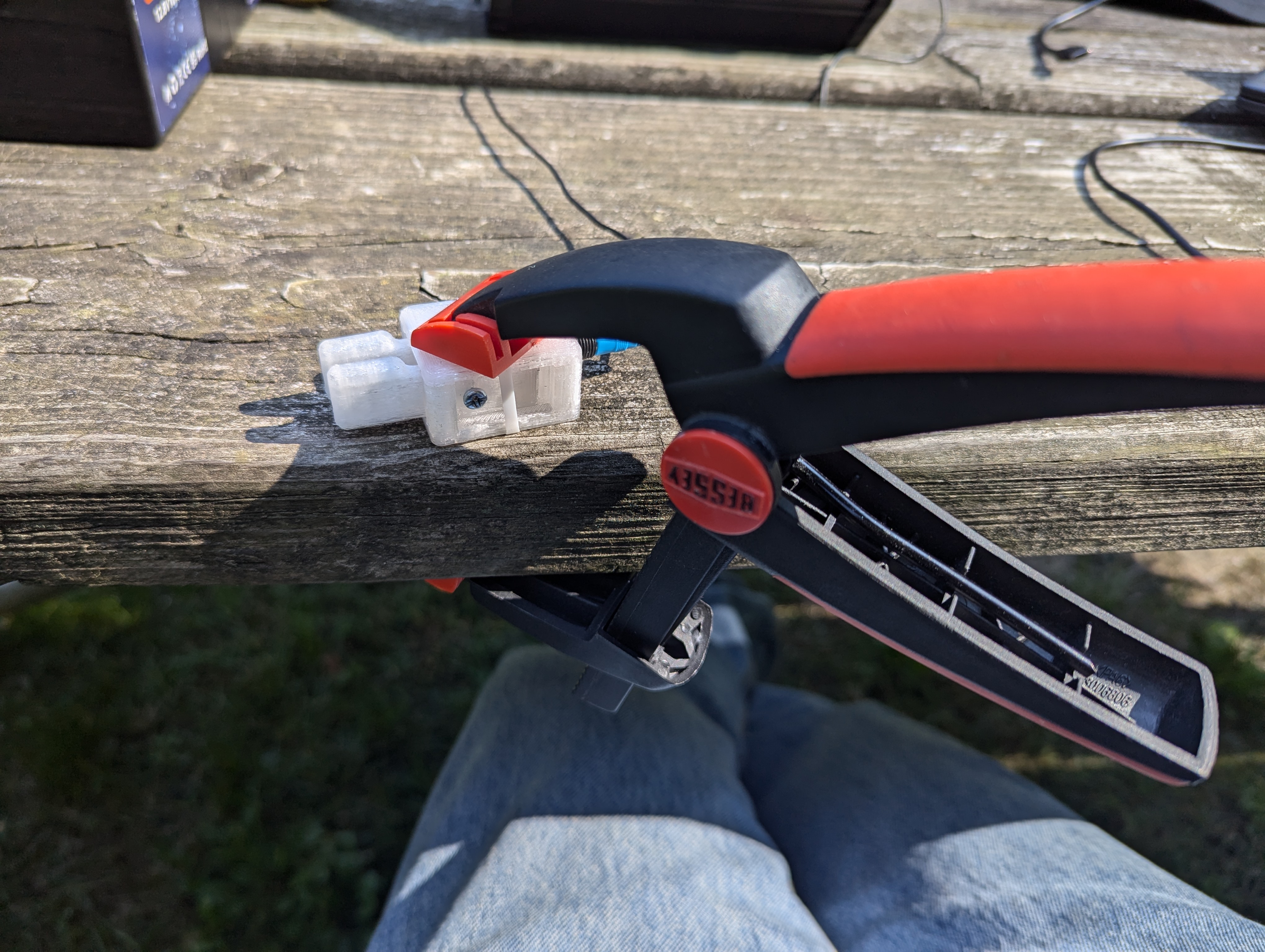
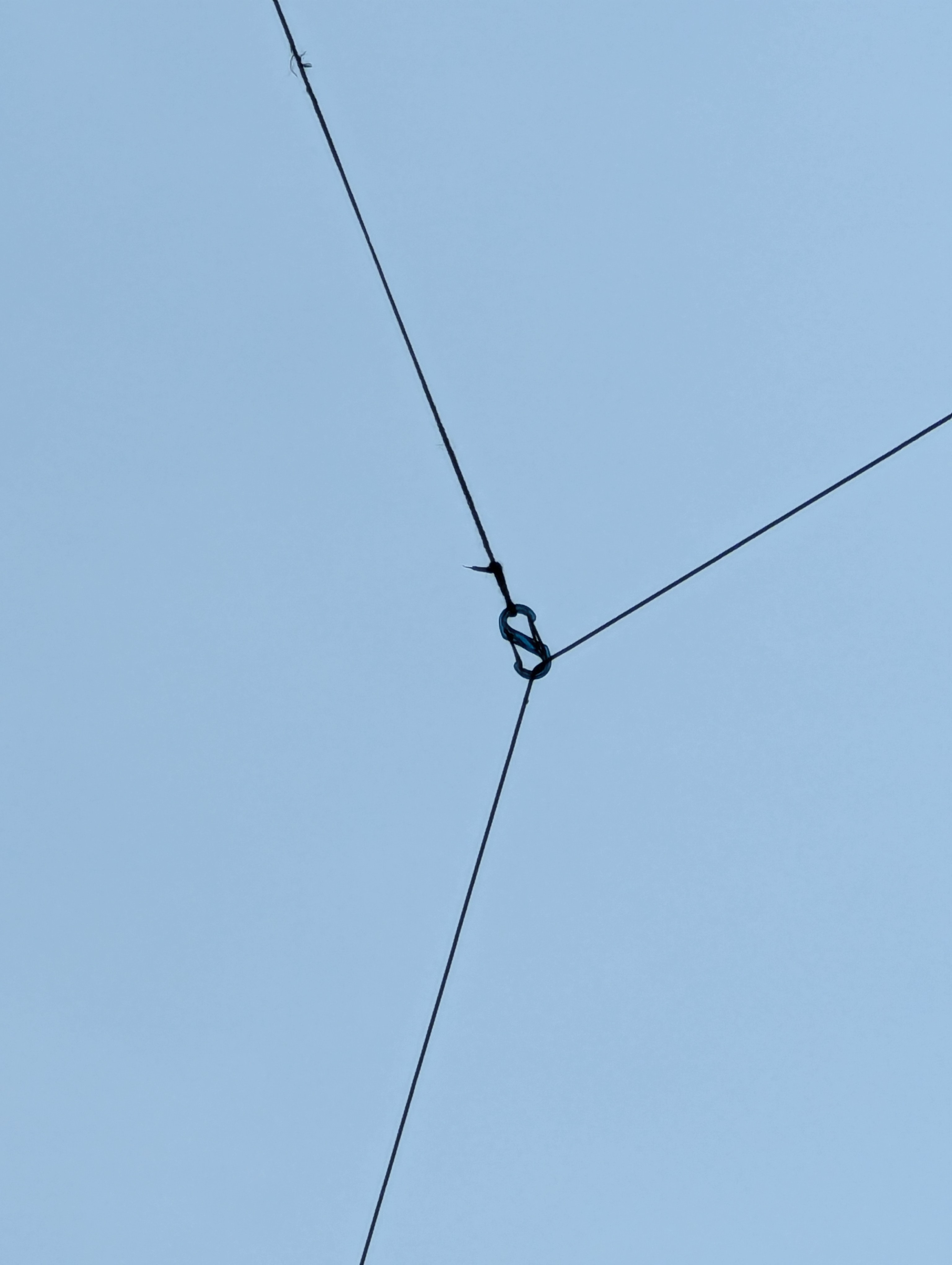
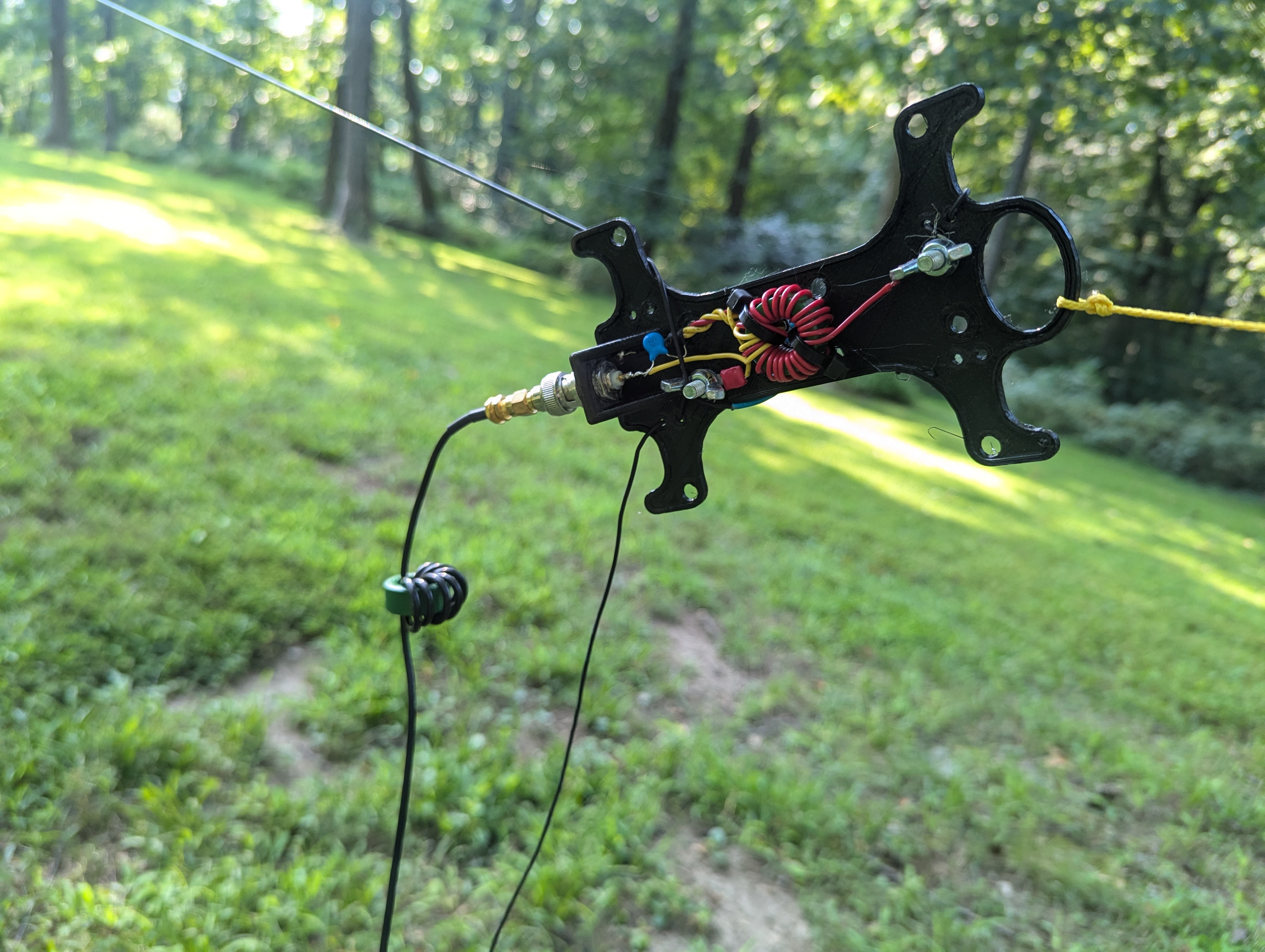
My 12.5m EFRW at home broke again, so I needed to restring it. The wire breaks at the tie point up in the tree. The kids and I failed to launch it again over the tree with slingshot out the window. I had also tried some small 3d-printed s-biner clips, but they’d release as soon as I launched with the slingshot I got the wire running flat through the other tree instead of up and over.

That didn’t last too long. The wire broke again at the tie point, so I launched it from the street again with the throw line and sockets. I kept it a little looser and switched to a bungee cord to keep it tensioned with some play.

efrw  antenna  home 

Tape Measure Yagi

There are easy instructions to build your own yagi on Instructables. I had just picked up some hose clamps and had the other necessary pieces: a broken tape measure and some 3/4-inch schedule 40 PVC and connectors; so I was ready to build.

The wiring on mine is held in place by the clamps and banana clip adapter. I always like those for prototyping. As directed, I tuned the antenna by moving radiators in and out and measuring with the NanoVNA.

The antenna is noticeably directional, so I can use it to find directions of signals. The S-meter and dB signal strength numbers on AUBS firmware make it easy to evaluate strength and direction.

I transmitted with it to the K3IR repeater as a test during a net.

Tuning the GRA-1900

Initial Tuning

The one-page document that comes with the GRA-1900T antenna detailing the jumper positions on the coil and the lengths at which to set the whip for each band didn’t seem to match up all that well, which led to some frustration out in the field.

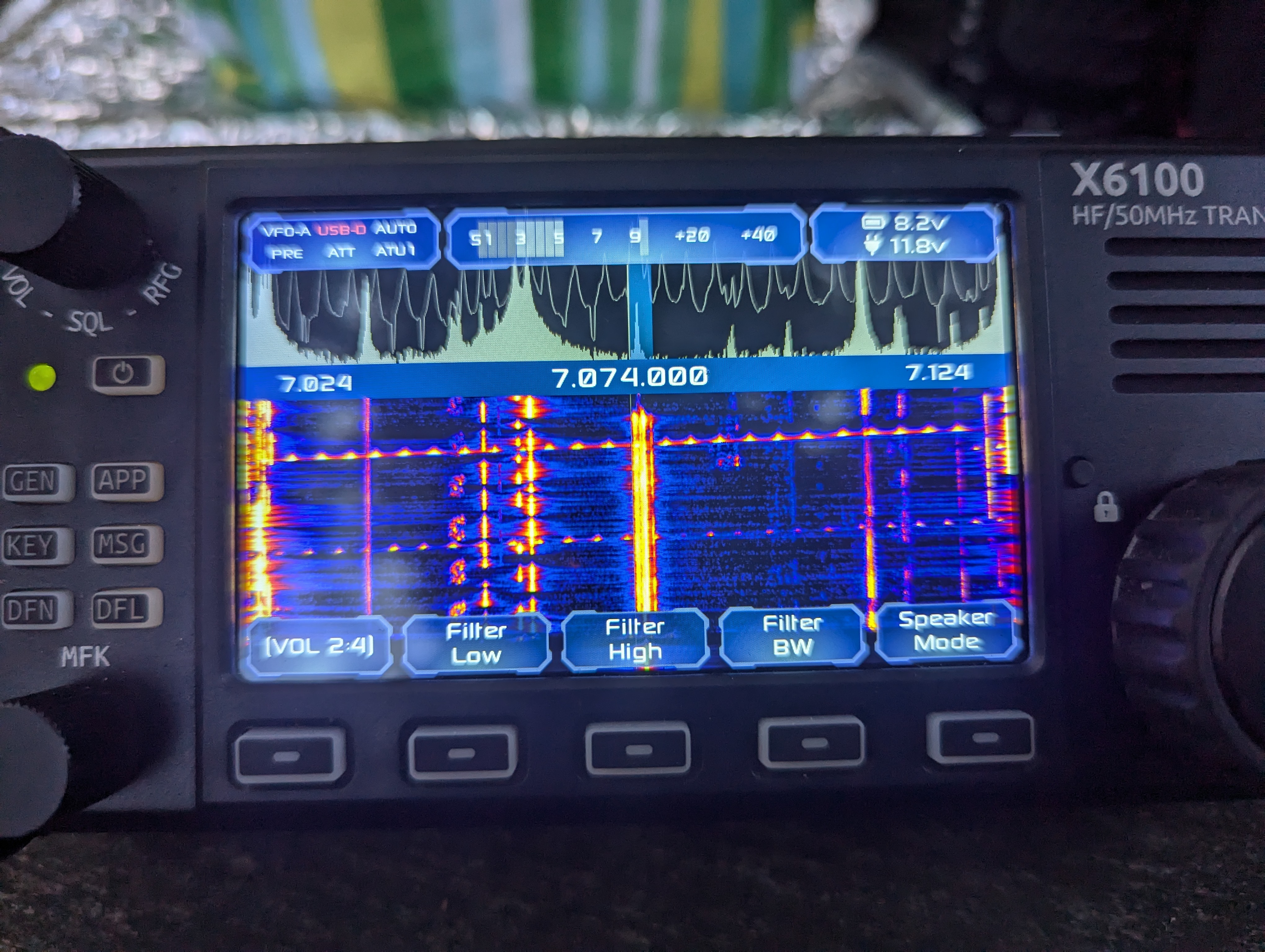
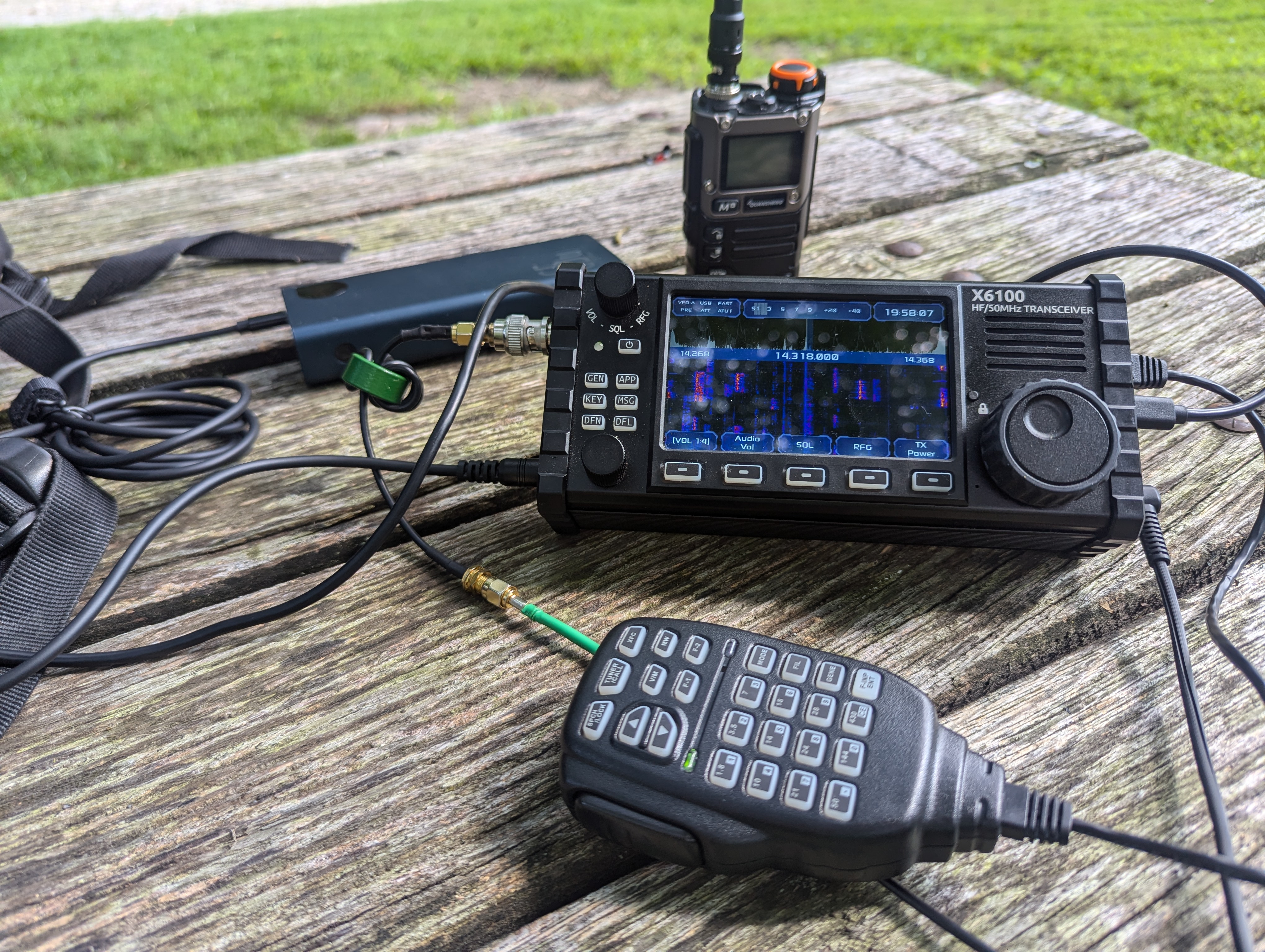
I decided to use my NanoVNA to reconstruct my own instructions for using the antenna. I extended the whip fully and recorded the resonant frequency for each jumper position of the coil. Knowing those frequencies, I can set the jumper and shorten the whip until the SWR sweep on my x6100 is happy. The SWR graph on the x6100 can be misleading sometimes, because it often shows a birdie dip or 2 in the graph, but now I’ll always know that I’m to shorten the whip to get where I need to be.

I’ll eventually apply labels to the coil with these frequencies.

US-1425 Susquehannock State Park

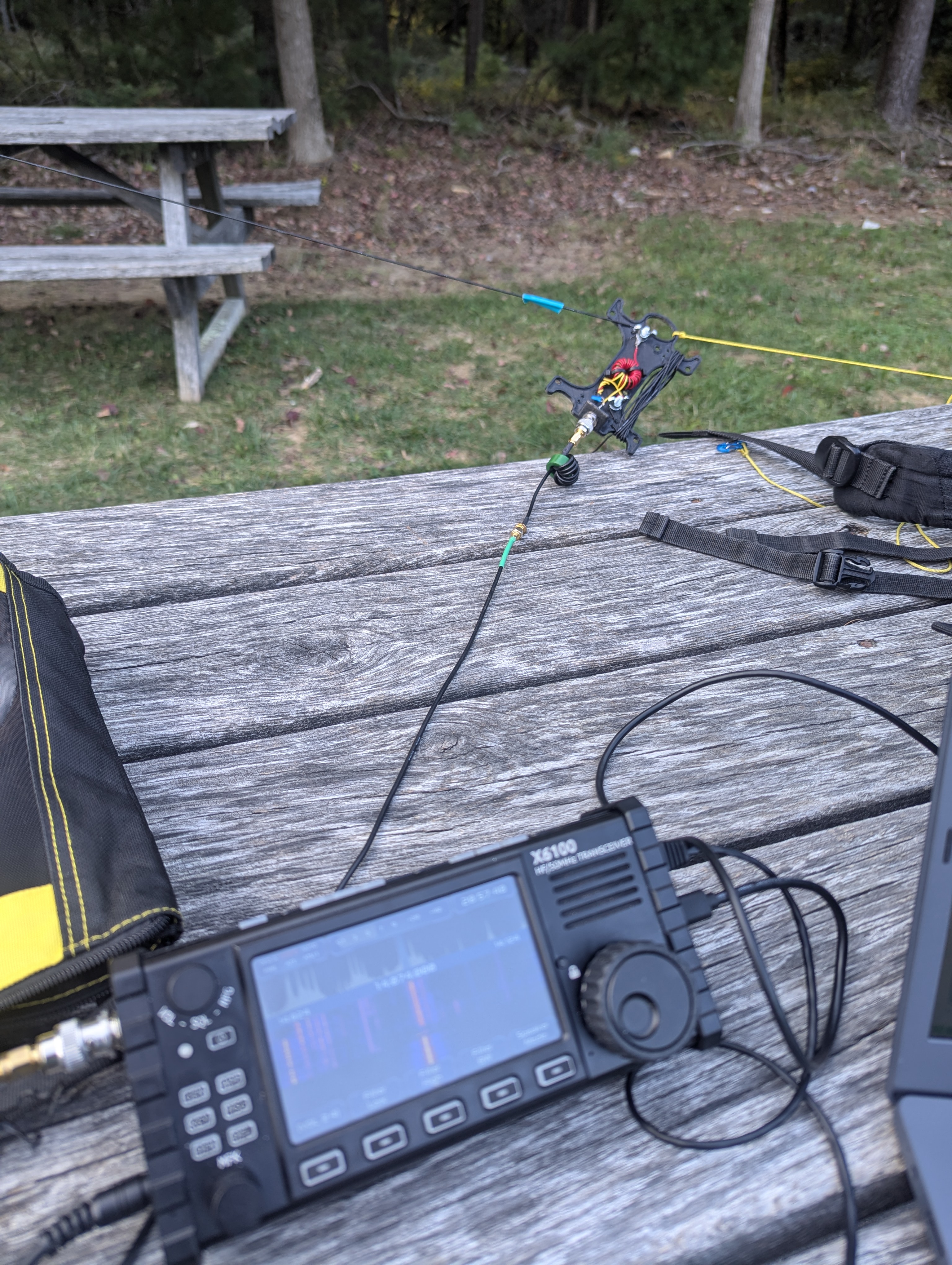
I took the GRA-1900T out to Susquehannock State Park for a field test. My plan to tune the antenna worked well. I set the jumper for the frequency below my intended operating frequency and shortened up the whip until the x6100 showed a good SWR curve. Easy!

Oops, Broken Fishing Pole Mast

Since I hadn’t used the fishing pole at the park, I forget I had it and left it behind when I packed up. 2 days later, I returned to retrieve it. Some kids had found it, had trouble collapsing it, dug in the dirt with it, and broke a section.

I was able to put it back together with the remaining sections, and I 3d-printed a new fork/loop to make it useful for supporting wire.

Two Parks in One Day

US-1356 Pinchot

I setup at a pavillion far away from everyone else, so as not to burden anyone wondering what I was doing. Putting up the 20m-long EFHW, I got the socket and throw line stuck in a tree. I had to cut it loose.

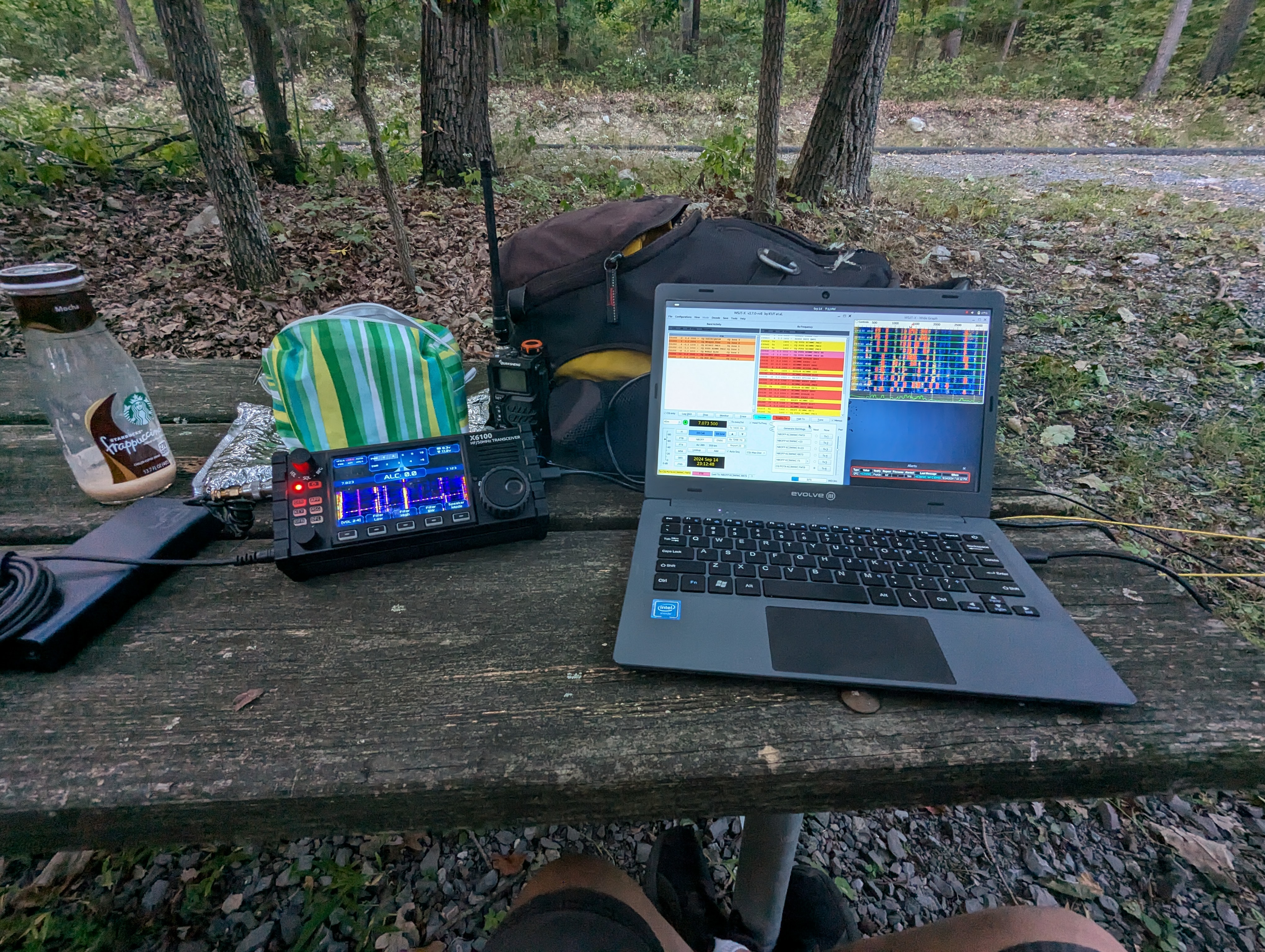
I tried 10m for 2 FT8 contacts, but that’s all the further I could stretch that band. The rest of my contacts came on FT8 40m, and one P2P SSB contact on 40m before I packed up.

US-1418 Sam Lewis

At the second park, I operated mostly 20m with the GRA-1900 coil and whip. I was struggling to get that to the right settings, so I finally just extended it and hit the tuner on the radio.

I accidentally crossed the 0000UTC mark into the next day, which means it’s a new activation. I scrambled to try to complete the new day, but fell short.

Tuning the Counterpoise

My antenna wires at the house were getting moved around a bit with some projects. I found my SWR was a bit high on a certain HF band, and I found moving or coiling the counterpoise (~5.2M) to shorten it greatly reduced SWR. I have to remember to watch performance and adjust the counterpoise as part of my setup and operating.

985 Workbench Net - 2024-06-11

My Week in Radio

  • I’ll miss field day.
  • POTA around Harrisburg, York, and Lancaster.
    • Mostly FT8/FT4
    • Also have been chase some phone park-to-park, and have been getting good reports with my little QRP radio
    • Exclusively testing the 20m-long EFHW I built.
  • Upgrading firmware from a 3rd party for my x6100, and my own patch to show me band boundaries by privilege
  • Moved the 1/4 wave ground-plane antenna higher in the tree.
  • Always get perplexing interference at start of this net, otherwise clear all day. It’s a net on the big repeater over in York that’s 15khz lower. Maybe I need to build a yagi next, so I can get more directional.

Other Discussion

  • Vic (KC3TYX) was making contacts with VARAC, not for winlink. The software let’s you beacon on 14.105MHz, and has 15 slots (channels) near the calling frequencies for conversation. Fire a beacon or 2, and check pskreporter to see if anyone’s listening.
  • Lots of digital modes have conventional calling frequencies.
  • WB8NUT website has sounds of digital modes. http://wb8nut.com/digital/
  • Jim (AF3Z) suggests a 5khz shift to help alleviate interference from W3HZU’s net on 145.970, so I redefined 985 as 146.990MHz with a -605MHz offset. That works in a test after the net.
  • Trying to move things around in the radio blew away the offset and PL when I saved the new 990 frequency. The computer works better or that programming.

New Firmware for X6100

There’s a new person building onto Oleg’s R1CBU firmware. He first made a patch TGZ available, and then an entire image.

He has a repo for this work, and it includes some build instructions which reference the buildroot and submodules. I think I’m close to being able to build it, but I’m seeing some errors trying to find the xkbcommon headers.

I did patch his source with my DB changes. I built the DB: sqlite3 params.db < params.sql, mounted the DATA partition, and copied my custom params.db to it.

It’s looking nice so far. I can use flrig and have wsjtx and fldigi both talk to it simultaneously. That’s the main improvement in my mind, but it includes some other fixes:

  • volume encoder can be spun quickly now
  • smoothing of the TX/SWR graphs
  • finer detail in the waterfall

POTA US-4356

After a bike ride in Harrisburg, I visited US-4356, Boyd Big Tree Preserve. I used the 20m EFHW sloped up into a tree near the main pavilion. I spoke to a park in Western PA, and a museum ship on Great Lakes in Toledo, OH. 15m FT4 was busy with lots of contesting, so I also ran some FT8 on 20m.

The go-box is over-stuffed again with extra rope. I need to slim it down again.

pota  efhw 

Camping, POTA, and Testing the EFHW

SPARC Elmer Night

I spent the Elmer Night tuning EFHW again with the NanoVNA. I proved that I saw the same graph when the antenna was stretched shallow vs a higher inverted-V.

I tried folding back the EFHW wire. It changed the tuning slower than cutting the wire. DX Engineering has a video about this. I didn’t get it finished at the meeting, since because it got dark.

Memorial Day Weekend POTA US-4361, Kings Gap Environmental Center

Matthew and I setup at Kings Gap Environmetal Center (US-4361) near the campground. I spent the most the time still slowly tuning my EFHW, and then dodging the rain. I barely made any contacts by the time I got the antenna in the air, and then the thunderstorms returned. We bailed, and I put the antenna up back at the campground strung over the site from tree to my fishing pole to telephone pole for the rest of the weekend. The twisted cords I’ve been using started unwinding, so it’s soon time to replace it with braided mason line.

efhw  pota  camping